Layer 01Creator commerce
STL memberships need a fulfilment plan before they become product lines
Creators selling STL memberships can turn digital files into physical product lines, but only if licensing, QA, packing and shipping are planned first.
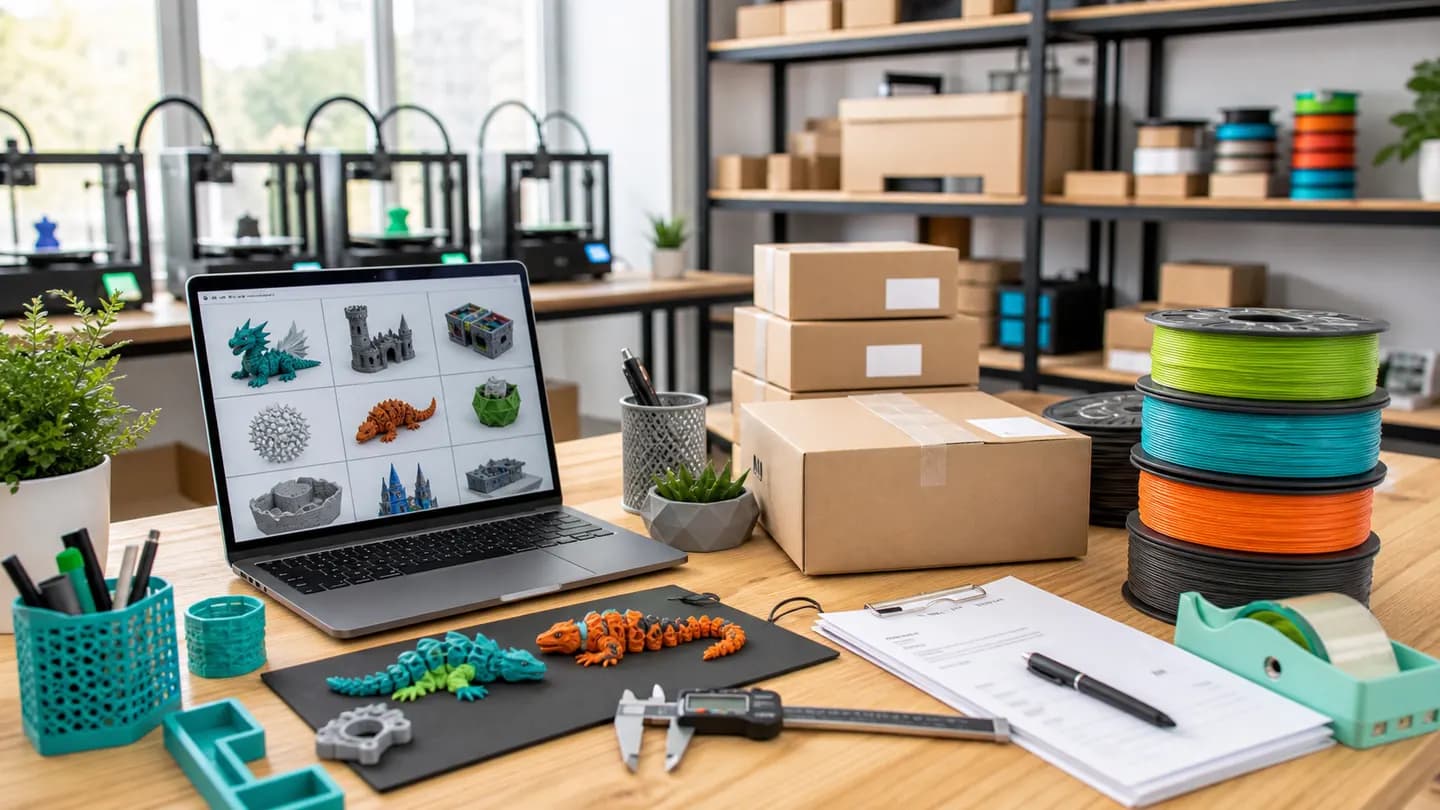
The most interesting new 3D print product line might already exist as a folder of STL files behind a creator membership. Patreon now markets digital product selling directly to creators and lists 3D print templates as one of the product types that can be sold. MyMiniFactory, Tribes, MakerWorld, Thangs and Cults have trained buyers to expect a constant stream of printable files. For designers, that is powerful. It also creates a new problem: a digital file business is not automatically a physical product business.
A member who downloads a model accepts the limits of their printer, filament, slicer, patience and skill. A customer who buys a finished product expects the object to arrive clean, intact, correctly coloured and packed like a real ecommerce order. That shift changes the whole commercial promise. The creator is no longer only selling access to a file. They are selling a repeatable physical outcome.
The commercial license is only the first gate
The legal side matters before anything else. All3DP Pro keeps its updated legal guide blunt: selling printed objects requires checking what the file license actually allows. MyMiniFactory object licensing makes the same point from the platform side, digital file store purchases can be personal use only unless a commercial right is granted. Many individual creators also add their own terms for attribution, active subscriptions, modified files, market channels and whether physical prints can be sold at all.
That is why a fulfilment plan should start with permission, not print settings. If the design is yours, document ownership. If you license from another creator, document what physical selling is allowed, where it is allowed, how long the right lasts and what happens when a subscription lapses. If the design is fan art or based on someone else's brand, treat that as high risk. Fulfilment cannot remove IP risk from a product that was never safe to sell.
A file library becomes a product line only when the boring parts are locked
Creators often think the hard part is making the model look good. That is true for the first sale. For the tenth, hundredth or thousandth order, the hard part is making the same promise again without becoming a support desk for missing colours, fragile joints, failed prints and late parcels. A popular STL can become a strong physical product, but only when the digital asset is turned into a production spec.
- Lock the exact file and 3MF used for the product, including plates, orientation, supports, scaling and colour intent where those choices affect the final customer experience.
- Choose the material and colour range before the listing goes live. A simple PLA range may sell better than a technical menu that buyers do not understand.
- Define what passes QA: layer quality, stringing tolerance, moving parts, fit, surface defects, missing pieces, colour matching and when a remake is required.
- Plan the parcel before the order arrives. Flexible prints, thin accessories, sharp corners and multipart kits all need different packing assumptions.
- Write the listing around the finished object, not the STL. Size, use case, colour options, dispatch estimate and care notes matter more than slicer jargon.
Why this matters more in 2026
The creator economy is moving toward more direct monetisation. Patreon promotes shops and one-time digital purchases alongside memberships. Etsy keeps tightening its language around creativity and seller involvement. MakerWorld launched a creator copyright protection program in February 2026 because file theft, unauthorised selling and cross-platform infringement are now visible commercial problems, not edge cases.
Those signals all point in the same direction. Digital creators are building real businesses around files, templates, collections and communities. The next step is not only more downloads. It is giving fans a way to buy the physical object, especially the fans who love the design but do not own a printer, do not want to tune one, or do not want to risk a bad print.
Do not buy a print farm just because one design is taking off
A viral model is exciting, but buying printers too early can turn a creator business into machine maintenance. Suddenly the creator is handling spool changes, queue management, failed prints, support removal, packing supplies, tracking numbers, refunds and replacements. That can be useful if the goal is to operate a print farm. It is a distraction if the goal is to design, launch and market better products.
The cleaner path is to test physical demand before committing to hardware. Pick one or two models that are small, repeatable, easy to photograph and realistic to ship globally. Turn each into a priced Print option with fixed material, colour and QA assumptions. Connect the selling channel once the product is ready, then watch real orders rather than likes, downloads or comments.
A practical launch plan for STL creators
- Choose three candidate models from your library: one proven fan favourite, one easy gift product and one functional or display accessory with repeat potential.
- Remove anything with unclear IP, fan art risk, fragile geometry or a license that does not explicitly allow physical selling.
- For each candidate, define the finished product promise in plain language: size, material, colour range, what is included, expected use and dispatch expectation.
- Use a faithful 3MF where possible so plates, orientation, supports and colour intent are not lost when the file moves into fulfilment.
- Launch the smallest clean test first, then add more Print options only after the first orders prove that customers understand and want the product.
The creator advantage
Independent 3D designers have something generic ecommerce brands struggle to copy: original files, an audience that already understands the work, and a reason for each product to exist. That does not mean every STL should become a shipped item. It means the best STL creators can build physical product lines with far less upfront inventory risk than traditional sellers.
The winners will not be the creators with the largest folders. They will be the creators who know which files deserve to become products, which rights they can safely sell under, and which operational promises they can keep after the first exciting order comes in.