Layer 01Production strategy
The future of 3D printing commerce is repeatable production, not printer ownership
Recent additive manufacturing and ecommerce updates point to the same shift: sellers need file checks, routing, QA, packing and fulfilment, not just more printer access.
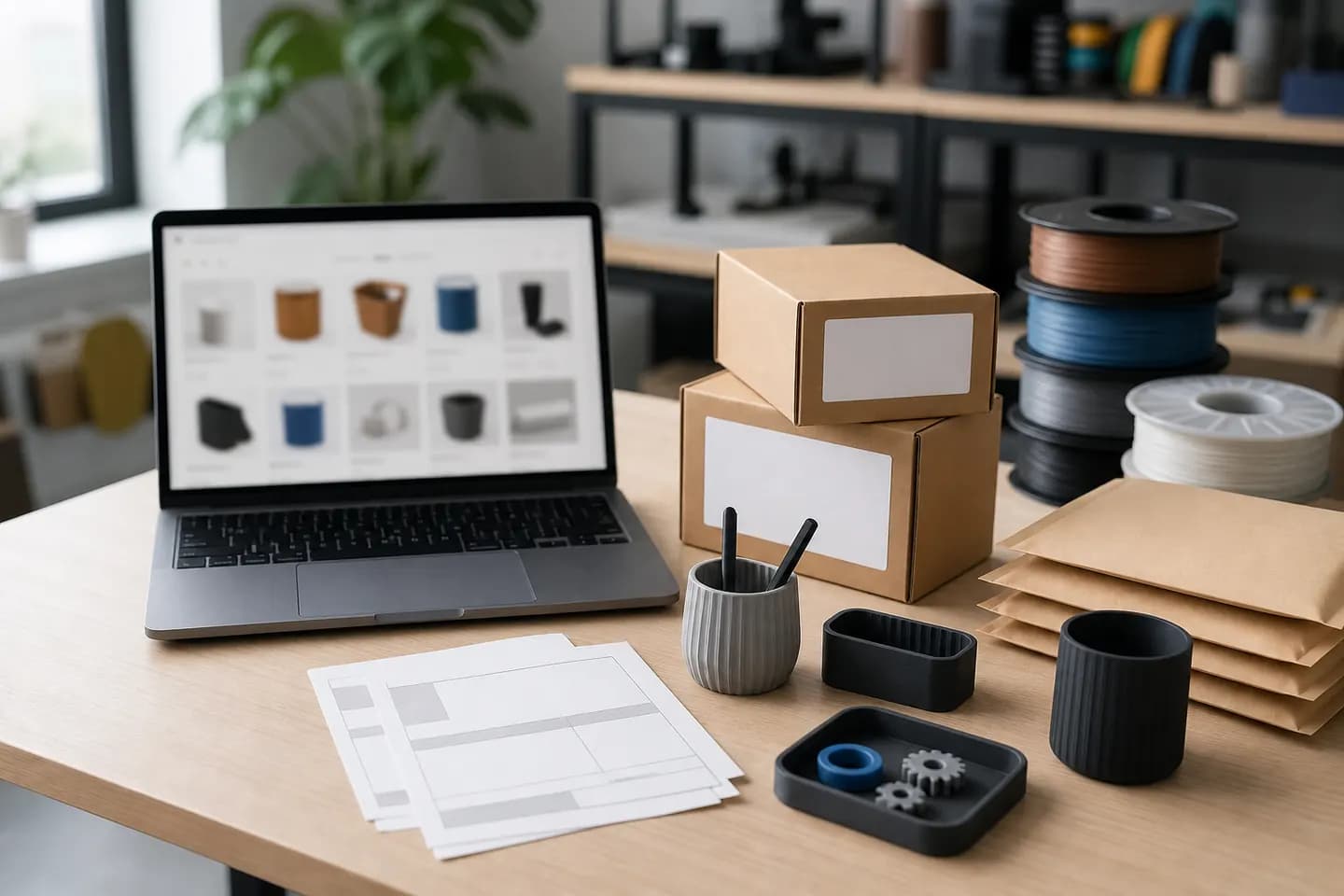
A useful pattern is showing up in recent 3D printing news. The most interesting stories are not only about new printer access or bigger spec sheets. They are about production capacity, file routing, qualification, inspection, repair, shipping tasks and the systems that make a printed part repeatable.
That matters for creators and ecommerce sellers because the same problem appears at a smaller scale. A product is not commercially ready just because it can be printed once. It becomes ready when the file, material, quote, QA standard, packing method and dispatch promise can survive real customer orders.
Printer access is not the moat
Desktop printers are better and cheaper than they used to be. That is good news for prototyping. It does not remove the operational work that starts after a design looks promising. Sellers still need to decide which file is the production file, which material and colour are available, how long the job should take, how failures are handled, how the parcel is packed and what the buyer sees after checkout.
Industrial additive manufacturing is moving in the same direction. Velo3D framed its new Livermore site around production capacity for demanding customers. 3YOURMIND and Phillips described command and control work around part identification, order management, production planning and shipping tasking. Austal is working on a framework for deciding which components are actually suitable for additive manufacturing against operational, commercial, technical and regulatory requirements.
The value is moving into the operational middle
The middle of the workflow used to sound boring: checks, routing, inspection, rework, material rules, packing and handoff. Now it is where a lot of the value is collecting. Phase3D is building around in-process inspection. MISTRAS expanded lab capabilities for manufacturing, inspection, repair and rework. Those are not hobby topics. They are production confidence topics.
- Capacity only matters when the same process can be trusted across many jobs.
- A digital thread matters because the right file has to reach the right production path with the right assumptions.
- Inspection and repair matter because paid orders need standards, not vibes.
- Part selection matters because not every printable object should become a sellable product.
- Shipping tasking matters because the customer judges the finished parcel, not the printer that made it.
Creator commerce has the same bottleneck
The Shopify side tells a similar story. Recent retail updates focus on things like inventory movement, fulfilment choices, pickup workflows, device management and purchase order tracking. That is infrastructure language. Storefronts are important, but sellers feel the pain when orders need to move through production, packing, tracking and customer expectations without manual babysitting.
For 3D printed products, this gets sharper. A creator can have a great STL or 3MF file, a strong audience and a buyer who wants the physical object. The gap is the production promise. Can that file be printed reliably? Is the material choice sensible? Does the quote reflect real machine time and risk? Can the item be packed safely? Can orders ship globally without the seller running a farm at home?
What sellers should do before buying more printers
- Separate product validation from production ownership. Paid demand should come before a printer shopping list.
- Lock the production file, especially if the product relies on a 3MF with plates, orientation, supports or colour intent.
- Define a small material and colour range that can be kept consistent for customers.
- Price the whole order path, not only filament. Include machine time, failures, QA, packing, shipping and support.
- Test the parcel before scaling the listing. A fragile product is not solved by a faster printer.
- Use fulfilment when the creator or seller should spend their time on design, content, listings and customers rather than machine maintenance.
The practical takeaway
Printer ownership is still useful. It is just not the same thing as production infrastructure. The stronger commercial question is not "can this be printed?" It is "can this be turned into a repeatable product that customers can buy, receive and trust?"
For creators, Etsy sellers and Shopify sellers, that is the shift worth watching. Better printers make more ideas possible. Fulfilment systems decide which of those ideas can become real product lines.