Layer 01Creator commerce
Viral 3D print demand becomes a fulfilment problem fast
A recent LittlePrintyCo story shows how quickly a family 3D printing project can become an Etsy, Instagram and fulfilment operation. Here is what creators should prepare before demand arrives.
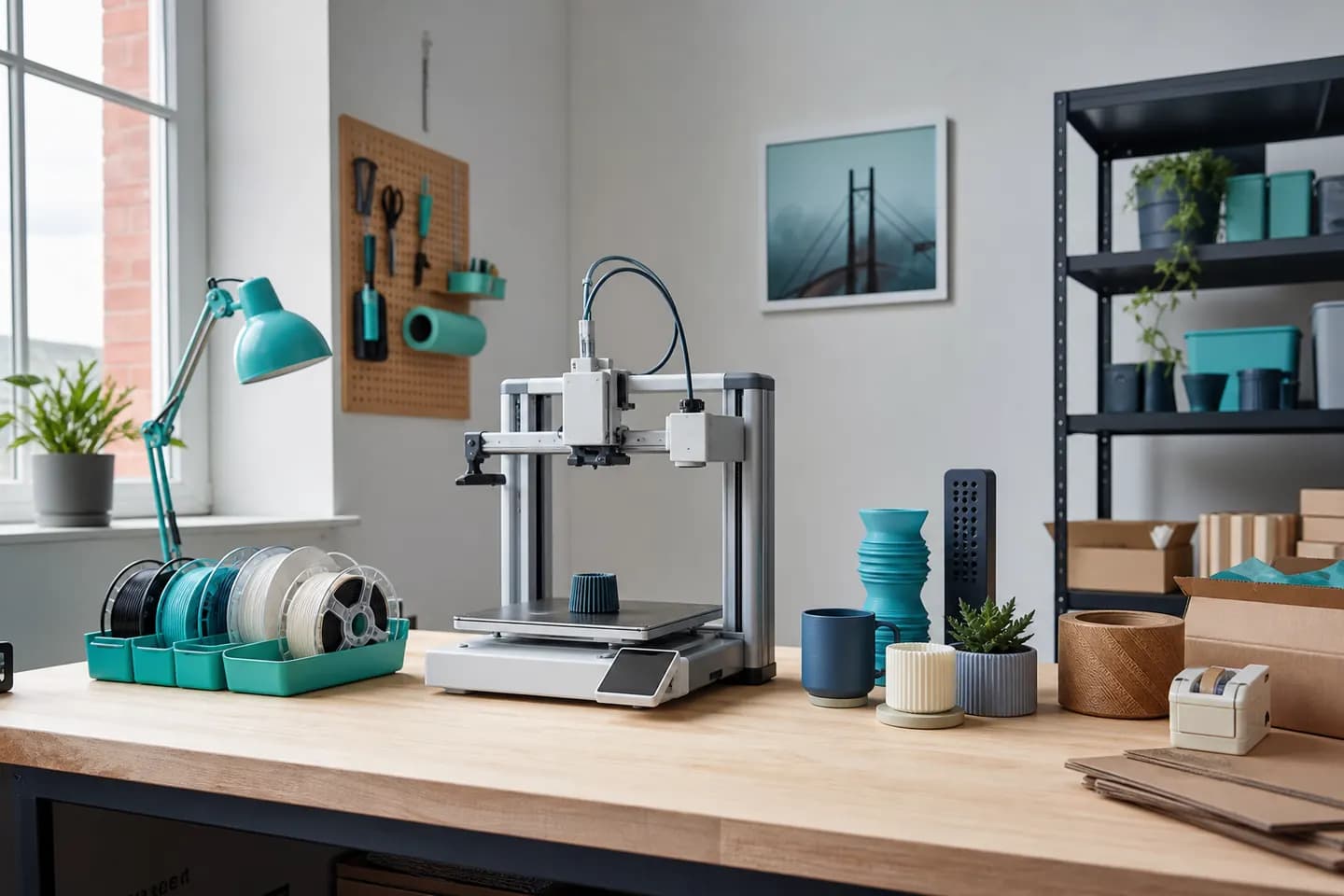
A current LittlePrintyCo story is a useful reminder for every 3D print creator watching social media this week. All3DP and Bambu Lab describe a family project that moved from a child seeing a 3D printed fidget board at school to a fast-growing Etsy and Instagram business with multiple Bambu printers. It is a wholesome story, but the seller lesson is very practical: demand can arrive before the fulfilment system is ready.
Most people will read the story and think about the printer. That is understandable. Desktop machines have become reliable enough that a family can turn curiosity into real products quickly. For sellers, though, the more important question is what happens after the first video, first market stall, first Etsy orders and first wave of comments. That is where a product becomes an operation.
The printer creates the first product, not the business
A single Bambu printer can make a finished item good enough to sell. It cannot, by itself, protect the seller from queue decisions, colour stock, failed prints, packing supplies, customer messages, dispatch promises, returns, replacements and the awkward moment where a viral product needs to be shipped every day. Those jobs are not side details. They are the customer experience.
This is why a viral 3D print idea should be treated as a fulfilment problem early. Likes and comments prove attention. Paid orders prove demand. Repeat orders prove that the seller can keep a promise. The gap between those points is where many small print businesses become stressful.
Before a product goes viral, lock the boring parts
- Lock the production file. If the product depends on orientation, supports, colour changes or plate layout, keep the tested 3MF rather than a loose STL alone.
- Choose the material and colour range before orders arrive. A simple, repeatable PLA or PETG range is usually better than a menu the seller cannot keep in stock.
- Define what passes QA. Moving parts, flex, fit, surface marks, stringing, missing pieces and weak joints need rules before customers start comparing orders.
- Plan the parcel. A product that prints cleanly can still fail commercially if it bends in the post, rattles in the box or costs more to ship than the buyer expected.
- Write the listing around the finished product. Buyers care about size, use, colour, processing time, care notes and what happens if something arrives damaged.
Do not let social traction force a bad hardware decision
A common reaction to sudden demand is to buy another printer. Sometimes that is right. Sometimes it turns a creator into a night-shift print farm operator. More machines add capacity, but they also add maintenance, calibration, material handling, space, noise, heat, packing pressure and more decisions when prints fail.
The cleaner sequence is to prove which product deserves capacity before buying capacity. Run one or two products as controlled Print options. Fix the file, material, colour, price, packing and dispatch assumptions. Then decide whether fulfilment should stay in-house, move to a partner, or use both depending on demand.
What Etsy and Shopify sellers should take from this
Etsy and Shopify make the storefront accessible. Social media can create attention quickly. Neither one solves the physical repeatability problem. A 3D printed product line needs a production spec behind every listing: file, material, colour, variant, price, dispatch estimate, packing rule and replacement policy.
That is especially important for original creator products. Etsy now talks more clearly about seller creativity and original work. If a seller has their own design, audience and product idea, the advantage is not only the file. The advantage is owning the product promise from listing to parcel.
A simple checklist before chasing volume
- Pick one product that is already getting attention and turn it into a written production spec.
- Order or make a real sample in each colour or material that customers will be allowed to buy.
- Photograph the finished product and packaging, not only the printer or the render.
- Model the full margin: material, machine time, failures, labour, packaging, marketplace fees, shipping, support and replacements.
- Decide what should be fulfilled in-house and what could be outsourced before the next viral post hits.
The useful lesson from LittlePrintyCo
The LittlePrintyCo story is not only a feel-good proof that young creators can build real businesses with desktop 3D printers. It is also a warning to every seller waiting for demand before thinking about fulfilment. Demand does not ask politely. It shows up as comments, messages, orders, stockouts and late nights.
The sellers who win will not be the ones who buy the most printers after a viral moment. They will be the ones who know which products are worth repeating, which files are ready for production, and which fulfilment promises they can keep when strangers start paying.