Layer 01Shopify growth
Shopify 3D printed product lines need fulfilment before they need more ideas.
Shopify highlights 3D printing as a 2026 business opportunity. The hard part for sellers is turning a product idea into priced, repeatable, shipped orders.
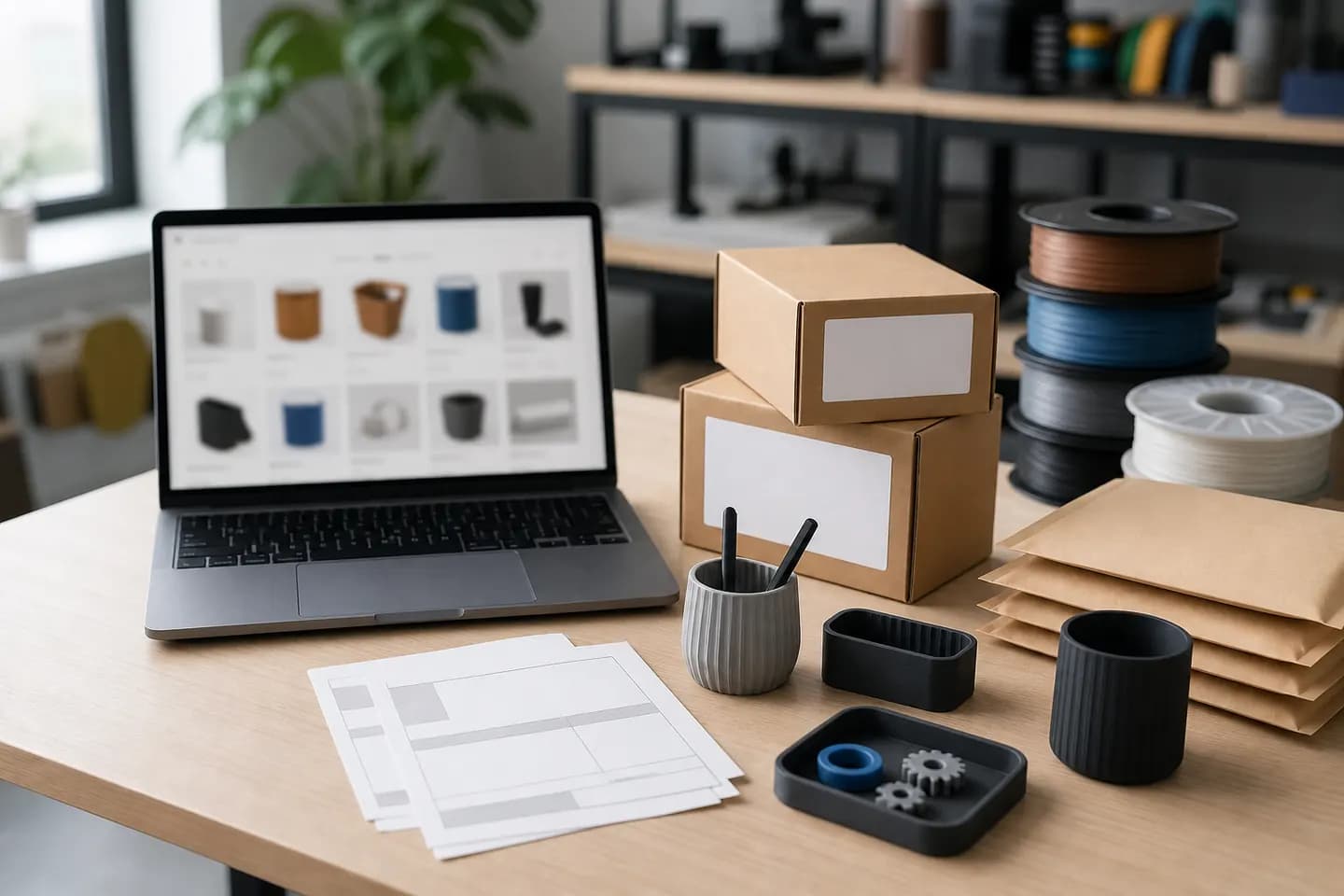
Shopify has been publishing 2026 guides around 3D printing business ideas, which is a strong signal that ecommerce platforms see the category as mainstream enough for new founders and existing brands.
That attention is useful, but product ideas are not the scarce part for most creators. The scarce part is a reliable path from idea to listing to order to dispatch without turning the founder into a night-shift print operator.
A product line is different from a print hobby
A Shopify brand can launch 3D printed accessories, spare parts, merch, desk objects or personalised add-ons without becoming a manufacturing company. But the product has to be designed as a commercial SKU.
- Can it fit inside a common 256 mm build envelope?
- Can the default material be PLA or PETG without misleading buyers?
- Can the product survive packing, shipping and normal customer handling?
- Can it be priced with enough margin after fulfilment, postage and marketplace costs?
- Can buyers understand the product from photos without needing technical 3D printing knowledge?
Why Shopify sellers should think in Print options
A Print option is a priced production spec: material, colour, nozzle, quantity assumptions and SKU mapping. For Shopify sellers, this is easier to manage than thinking about every print job as a bespoke manufacturing request.
That language matters because ecommerce needs stable SKUs. A product page needs a predictable fulfilment cost. An order importer needs to map a line item to the right spec. A support team needs to know what was meant to be printed.
The best first Shopify 3D products
The most practical first products are add-ons around an existing audience: desk accessories for a creator brand, fitment parts for a hobby niche, personalised tags for a pet brand, display stands for collectibles, cookie cutters for bakers, or compact promo goods for a campaign.
Makr3D is designed for that exact middle ground: more specialised than a generic 2D print-on-demand platform, but more ecommerce-native than a one-off print bureau.