Layer 01Multi-colour
Low-waste multi-colour printing is changing how creators should price SKUs.
Toolchanger and multi-filament systems are reducing purge waste and setup friction. Creators should price colour-heavy SKUs around throughput, not material alone.
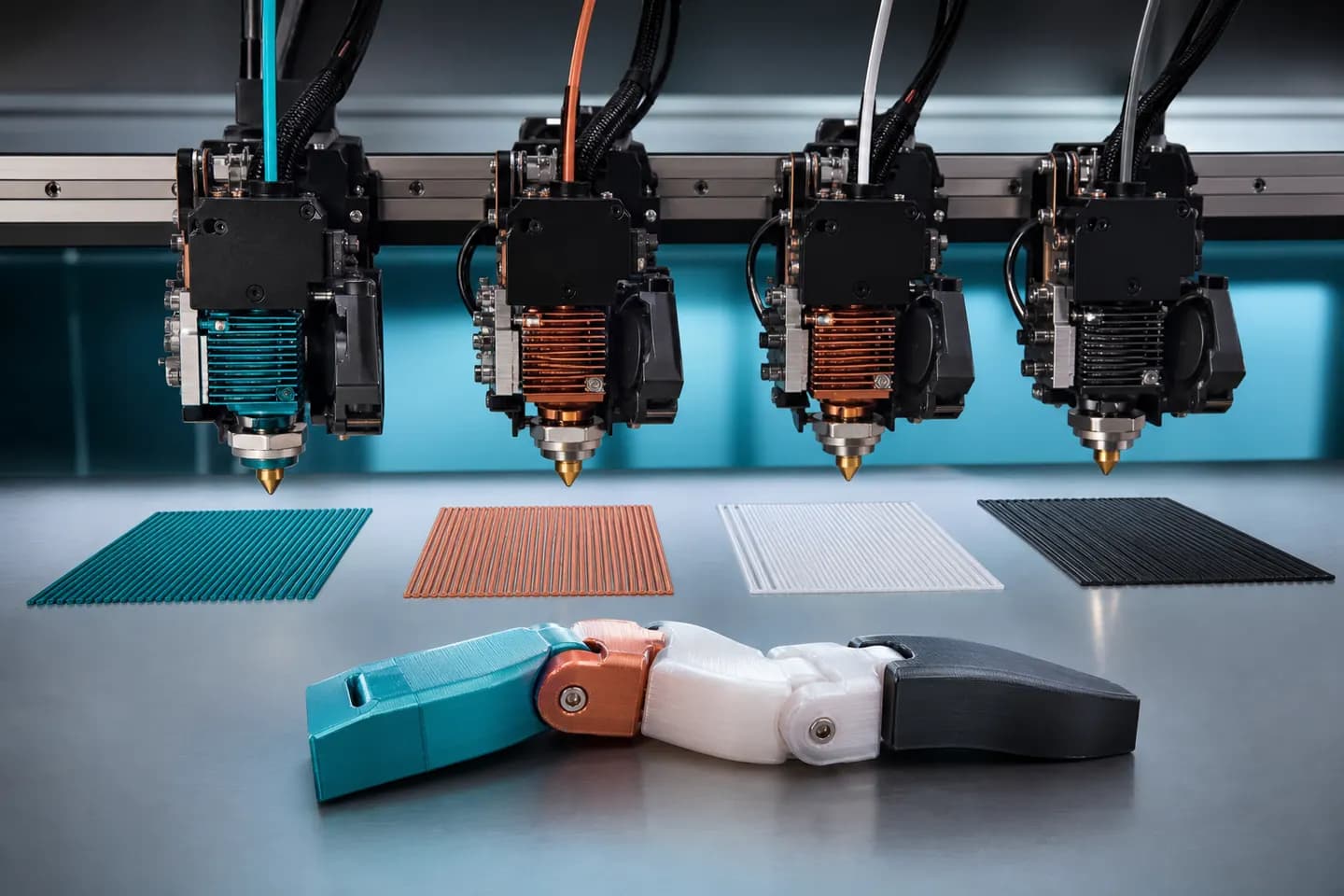
The strongest desktop 3D printing story in June is not just cheaper machines. It is the race to make multi-colour printing less wasteful and less painful. Snapmaker has been pushing its U1 toolchanger ecosystem, including a public innovation fund for developers working around Klipper, OrcaSlicer and related tooling.
For sellers, the practical implication is simple: colour-heavy products are becoming more commercially realistic. But they still need to be priced as production products, not as single showcase prints.
Colour sells. Waste eats margin.
Multi-colour prints often look better in thumbnails, improve perceived value and make a product easier to differentiate. They can also create long print times, purge waste, extra failure modes and more QA judgement calls.
- A four-colour product can look premium but may have lower margin than a one-colour product if purge waste is high.
- A toolchanger can reduce colour-change waste, but production time and QA still matter.
- A colourful design should earn its colour through higher conversion, higher price or stronger retention.
- The best SKU is not the prettiest test print. It is the repeatable product that customers buy and the team can fulfil consistently.
What this means for Makr3D sellers
Makr3D launches with faithful 3MF mode as the default. That matters because the creator can preserve orientation, plates, supports and colour intent where the source file carries that information. The team still reviews production risk before printing, but the goal is not to flatten every design into a generic profile.
For creator-led products, that is a useful middle ground. Keep the design intent that made the product sell, then price it against real fulfilment assumptions: material, print time, colour handling, dispatch estimate and remake risk.
The opportunity is product architecture
The sellers who win on colour will design around fulfilment from the beginning. That might mean limiting a launch product to two colours, using colour only on visible surfaces, keeping the default Print option simple and offering a premium colour option once demand is proven.
Colour is no longer just a novelty. It is becoming a product strategy. The creators who understand the production economics will have better margins than sellers who only copy the latest flashy print trend.