Layer 013D Print Selling
Bambu PLA Pure just launched: the 3D print seller checklist before toy-safe claims
Bambu Lab PLA Pure is a reminder: safer filament is useful, but Etsy and Shopify sellers still need product, batch and claim discipline.
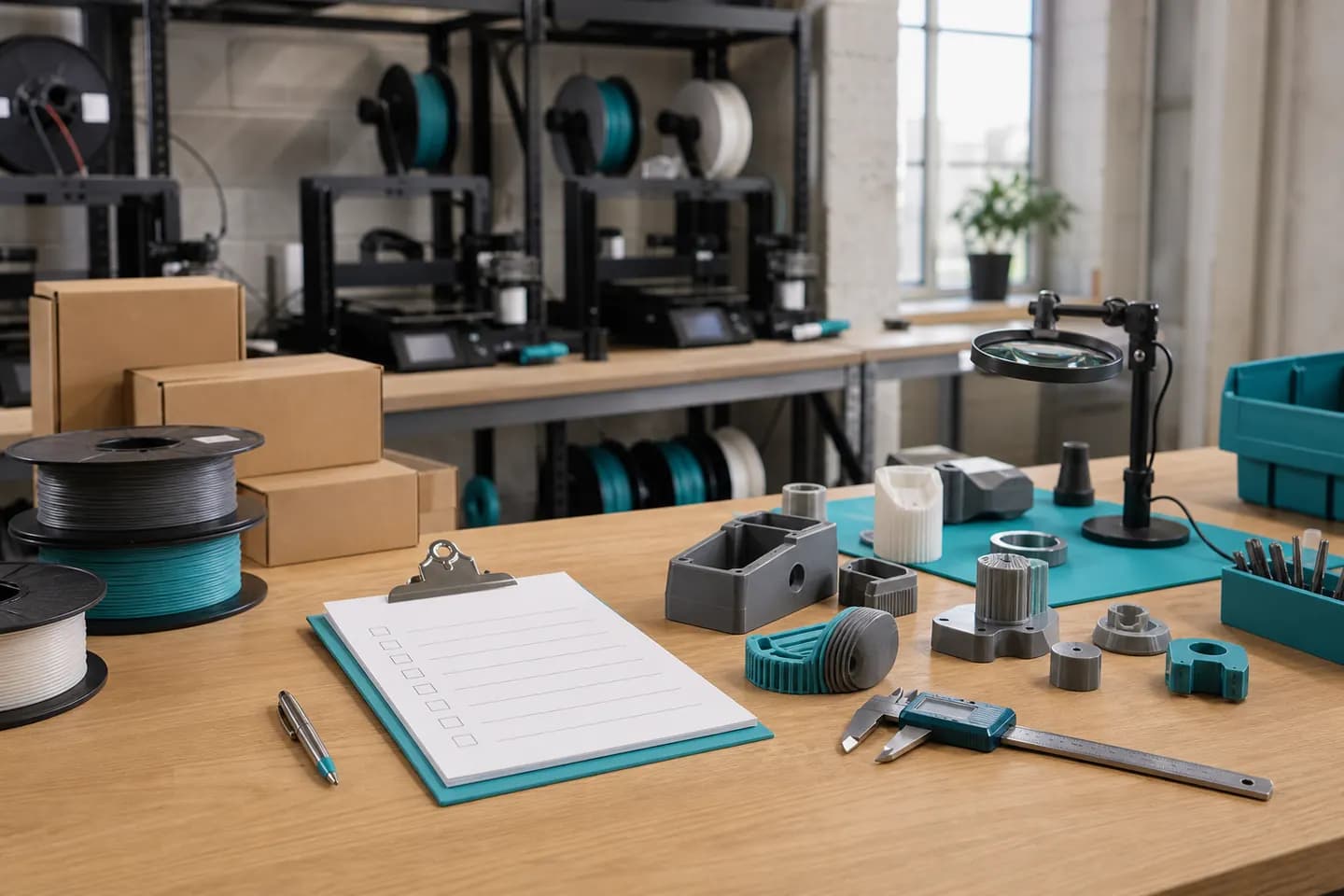
On 16 June 2026, Bambu Lab launched PLA Pure, a PLA filament positioned around cleaner home printing, documented ingredients, EU 10/2011 food-contact-material compliance at ingredient level, UL 2904 GREENGUARD emissions certification, and EN 71-3 testing for migration of certain elements from toy materials. Within a day, creator and engineering press had picked up the point that matters most for small 3D print businesses: material paperwork is moving from a hidden supply-chain detail to something sellers may need to understand before they make product claims.
That does not mean every PLA print is now a toy, a food-contact product or automatically compliant. In fact, the opposite is the useful lesson. Bambu Lab notes that the certifications apply to the filament and its ingredients, while the suitability of a finished printed object still depends on nozzle hygiene, printing conditions, the object geometry and how the item is used. For Etsy sellers, Shopify sellers, dropsellers and creators testing 3D-printed products, the story is less about one spool of filament and more about the gap between a nice print and a sellable product.
What changed
The practical change is that one of the largest desktop FDM brands is making material documentation a front-of-stage feature. PLA Pure is described by Bambu Lab as using five documented ingredients, with every ingredient appearing on the EU 10/2011 positive list. Engineering.com highlighted the same traceability angle, and Creative Bloq focused on the EN 71-3 certificate angle for UK makers working toward toy compliance.
For hobby users, this is mainly a safer-materials story. For sellers, it is a product-operations story. If you sell a flexi animal, fidget, desk creature, pretend-play item, miniature accessory, sensory object or anything that obviously attracts children, the marketplace listing is only the visible tip of the business. Underneath it are design rights, material choice, print settings, batch tracking, age grading, small-parts risk, packaging, warnings, customer use and the question of whether your words on the listing match what you can evidence.
Why Etsy and Shopify sellers should care
A lot of 3D printed ecommerce starts backwards. A creator finds a file, gets a clean print, photographs it, lists it, then worries about policy, fulfilment and safety after the first orders arrive. That worked better when 3D printing was a novelty. It is riskier now, because 3D printed products are becoming normal consumer products. Buyers do not care that a dragon, fidget cube or custom desk tool came off a printer. They care whether it arrives clean, matches the photos, survives use, and has not been marketed in a way that creates false confidence.
Etsy adds another layer. Its Creativity Standards allow physical items made by a seller using computerized tools and original designs produced by production partners, but the important phrase is original design. A production partner can help make the item, but that does not remove the seller's responsibility to disclose correctly, use accurate photos, understand the origin of the design and avoid treating a purchased file licence as a blanket marketplace-policy solution.
Shopify sellers have more control over their storefront, but less marketplace hand-holding. That freedom is useful, especially for brand-building, bundles and repeat customers. It also means your product page, ads, FAQs and packaging need to be internally consistent. Calling an item toy safe, baby safe, food safe or suitable for children is not a styling choice. It is a product claim. If you cannot explain the material, production process, intended use and safety assessment behind the claim, do not use it.
The founder-led takeaway: sell boringly, not vaguely
The opportunity in 3D printed ecommerce is not to add louder claims to product pages. It is to make small-batch product testing more disciplined than the average hobby seller. Good sellers will increasingly look less like people who own printers and more like small product companies: one material spec, one design revision, one print profile, one packaging method, one fulfilment route and one clear promise to the buyer.
That is especially true when a product scales beyond the seller's own printer. A file that prints nicely once can still fail commercially if the 3MF is changed, the orientation moves, the colour varies, supports leave rough edges, the part is too brittle for shipping, or the seller cannot tell which batch a customer received. The Bambu PLA Pure launch is a useful reminder that repeatability and documentation are not enterprise luxuries. They are what separates a listing from a product.
Practical takeaways for creators testing 3D printed products
- Classify the product before naming it. Decide whether the item is decor, a functional accessory, a collectible, a toy-like object, a pet item or a food-contact-adjacent object. The riskiest mistake is letting SEO keywords accidentally turn a decorative print into a children's toy claim.
- Keep the claim weaker than the evidence. It is fine to say what the product is made from if you know the material. It is not fine to imply a finished FDM part is food-safe, child-safe or certified unless the finished product, not just the filament, supports that claim.
- Treat the file as a controlled asset. Lock the tested 3MF, orientation, layer height, wall count, infill, supports, colour, material and post-processing steps before you scale. If the product needs a change, create a new revision rather than quietly replacing the file.
- Design for inspection, not just beauty. Avoid sharp edges, fragile pins, tiny detachable pieces, unsupported thin features and surfaces that hide stringing or rough support scars. A product that photographs well but produces unpredictable QA failures will punish you at fulfilment stage.
- Document batches even at small scale. Keep records of material, colour, printer profile, production date range and any customer complaints. If a defect appears, you need to know whether it was one bad part, one bad file revision or a repeatable design flaw.
Where fulfilment fits into the compliance conversation
Outsourcing print fulfilment is not a shortcut around product responsibility. It should be treated as part of the control system. If a creator owns the design and listing, the fulfilment partner should help produce the same item consistently, pack it cleanly, ship it reliably and avoid uncontrolled substitutions. That is a different model from casual dropshipping, where the seller may not know what machine, material, file revision or packaging the buyer receives.
The important point is not whether a fulfilment partner uses a particular newly launched filament. The important point is whether the seller can define what should be made and whether the production setup can repeat it. If your listing depends on a specific material certificate, colour, filament brand or batch process, that needs to be part of the production specification before orders go live. Do not assume it. Write it down.
What not to do after the PLA Pure news
- Do not update every PLA listing to say food-safe. FDM prints have layer lines, use-specific hygiene issues and temperature limitations, and Bambu Lab itself warns that finished-object suitability depends on more than filament ingredients.
- Do not describe a toy-like print as suitable for children unless you have assessed the finished product, including small parts, edges, breakage, warnings, age grading and the relevant market rules.
- Do not assume Etsy accepts a product because the file had a commercial licence. Etsy Creativity Standards focus heavily on seller originality and accurate disclosure.
- Do not scale a viral listing before you have tested packaging, QA rejects and customer-use assumptions. Fulfilment problems compound faster than print time.
A safer way to choose your next product
For a first test, choose one product that avoids the highest-friction categories. A cable organiser, tool holder, plant marker, camera accessory, desk tidy insert, cosplay display stand or workshop jig is usually easier to position clearly than a baby item, chewable pet product, cookie cutter or children's fidget. You still need good design and honest claims, but you are not starting with the most sensitive use case.
Then build a one-page product spec before you list it: product name, intended use, not-intended use, original design notes, material, colour, 3MF file, print orientation, finish standard, packaging method, shipping region and the exact wording you will not use. That last part matters. Deciding not to say toy, food safe, baby safe or certified can be as important as the keywords you choose.
Concrete next step: pick one non-food, non-child-appeal product this week and test it as a controlled product, not just a cool print. Use one material, one colour, one locked 3MF, one marketplace and one fulfilment route. Photograph the final item honestly, list it with restrained claims, then review the first customer questions and any QA issues before adding variants. That is how a creator moves from printing objects to building a product line.